Mon - Sat: 9:30 - 18:00
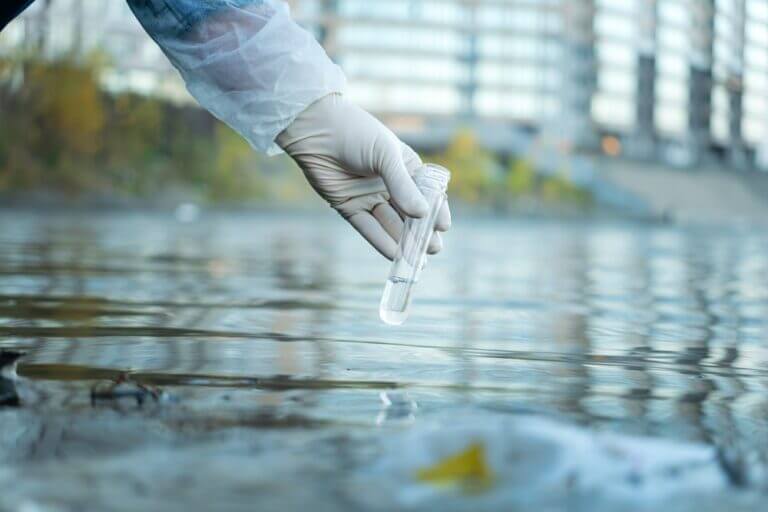
Water testing plays a critical role in meeting regulatory standards and ensuring safe, contaminant-free water for consumption and industrial use. SIMA LABS conducts a wide array of water quality assessments, aligned with FSSAI guidelines, which require Food Manufacturers to submit water test reports (as per BIS standards) from NABL-accredited laboratories. In addition, as per the EPA 1986 Schedule VI, MoEF&CC, and CPCB norms, regular quality testing of ETP and STP water is mandatory.
High-quality water is essential to public health, economic development, and environmental sustainability. SIMA LABS offers complete water testing services to help ensure compliance with national and international standards, protecting both consumer safety and business integrity.
WASTEWATER ANALYSIS
Effective wastewater management begins with accurate testing. SIMA LABS provides in-depth wastewater analysis to support regulatory compliance and guide industries toward responsible and environmentally sound disposal practices.
Our services cover:
Industrial Wastewater
Domestic Wastewater
Effluent Toxicity (Bioassay Testing)
We also test waste materials like sludge, used oil, slurry, and semi-solid or solid waste. Our advanced laboratories evaluate the waste’s chemical composition, toxicity, reactivity, and biodegradability to determine the most appropriate treatment and disposal methods. With SIMA LABS, industries can meet stringent pollution control regulations while implementing sustainable waste management practices.
Ensuring Safe Water with Precision and Compliance
Uranium contamination in water sources, especially drinking water, has become a pressing concern in many regions across the globe. As a naturally occurring radioactive element, uranium can seep into groundwater and surface water through both geological activity and industrial practices. Though it plays a critical role in energy generation and industry, uranium in drinking water can pose serious health risks, including long-term kidney damage and increased cancer risk.
At SIMA LABS, we provide comprehensive uranium testing services for drinking water, groundwater, and environmental samples. Our advanced instrumentation and precise analytical techniques help identify contamination levels, ensuring regulatory compliance and public health protection.
Uranium’s threat lies in both its chemical toxicity and radioactive nature. Even at low levels, chronic exposure can result in:
Kidney Toxicity: Uranium can accumulate in the kidneys, potentially causing nephrotoxicity.
Cancer Risk: Radiation from uranium increases the likelihood of developing cancer, particularly in organs like the lungs and bones.
Radiological Effects: Extended exposure can result in bone marrow suppression and heightened leukemia risk.
Regular monitoring is especially critical in areas near uranium mines or where natural uranium deposits are common.
SIMA LABS ensures full compliance with international and national regulatory frameworks. We follow all established limits to keep your water within safe consumption parameters:
EPA (USA): Maximum Contaminant Level (MCL) – 30 µg/L
WHO: Guideline Value – 15 µg/L
European Union: Maximum Allowable Limit – 10 µg/L
Proper sample collection is crucial to ensure valid results. SIMA LABS provides on-site sampling services and detailed guidance to ensure contamination-free collection.
We utilize Inductively Coupled Plasma Mass Spectrometry (ICP-MS), one of the most advanced techniques available today for trace metal detection:
Sensitivity: Detects uranium down to 0.001 µg/L
Accuracy: High precision for dependable results
Versatility: Suitable for a wide range of matrices—drinking water, groundwater, soil, and sludge
Cutting-Edge Technology: Our state-of-the-art ICP-MS instruments ensure the most sensitive and reliable uranium detection.
Accurate Results: Our methods are validated, reproducible, and compliant with global standards.
Expert Team: Our scientists and technical staff bring deep expertise in radioanalytical testing.
Quick Turnaround: Timely reporting helps you take corrective action without delays.
Regulatory Support: We assist you in meeting FSSAI, BIS, CPCB, and international guidelines.
Complete Testing Solutions: From sample logistics to result interpretation, SIMA LABS is your trusted partner in water safety.
Protecting your water quality against radioactive contaminants like uranium is non-negotiable. Partner with SIMA LABS for reliable, accredited, and accurate uranium testing solutions—ensuring that your water remains safe, compliant, and sustainable.
At SIMA LABS Pvt. Ltd., we are committed to safeguarding public health by ensuring the highest standards in drinking water quality. We specialize in the detection of harmful contaminants such as Giardia, Cryptosporidium, and MS phage, using advanced methodologies like RT-PCR and USEPA Method 1602. These tests help ensure compliance with both national and international water safety regulations.
| Pathogen | Description | Health Risks |
|---|---|---|
| Giardia | A microscopic protozoan causing giardiasis, typically spread through contaminated water. Symptoms include diarrhoea, nausea, and abdominal cramps. | Poses a serious threat to children, the elderly, and immunocompromised individuals. Can cause dehydration and malnutrition. |
| Cryptosporidium | Another protozoan parasite leading to cryptosporidiosis, marked by severe watery diarrhoea. It is resistant to standard chlorination. | Similar to Giardia, it presents high risk to vulnerable groups, with potential for life-threatening infections in immunocompromised patients. |
| MS Phage | A bacteriophage that infects E. coli, used as an indicator of fecal contamination in water. | Signals potential presence of pathogenic microbes, indicating public health risk. |
Overview:
Real-Time Polymerase Chain Reaction (RT-PCR) is a sensitive molecular diagnostic tool used to detect and quantify the DNA of Giardia and Cryptosporidium in water samples.
Process:
Sample Collection: Performed using sterile containers to avoid cross-contamination.
DNA Extraction: Protozoan DNA is extracted from the water sample.

Amplification: RT-PCR amplifies the extracted DNA to detect specific genetic markers.
Analysis: Quantitative results provide clear insight into contamination levels.
Overview:
This USEPA-standard method detects MS phage as an indicator of fecal pollution in water, enhancing monitoring of microbial water safety.
Process:
Sample Collection: Water is collected under controlled, sterile conditions.
Enrichment: Samples are inoculated into a culture medium to encourage MS phage growth.
Plaque Assay: After incubation, plaques (zones of infection) are counted.
Interpretation: Results help assess the extent of fecal contamination.
Safe Drinking Water Act (SDWA) mandates regular monitoring of Giardia and Cryptosporidium.
USEPA Method 1602 provides a standardized procedure for MS phage testing.
Directive 98/83/EC ensures monitoring of microbial contaminants.
Regulation (EU) No. 2017/852 reinforces standards for drinking water safety.
Recommends regular monitoring for protozoan pathogens and fecal indicators.
Promotes best practices for water safety and public health protection.
Offers global food and water safety standards.
Emphasizes the control of microbial contamination in drinking water.
RT-PCR for Giardia and Cryptosporidium: Precise identification and quantification using molecular diagnostics.
MS Phage Detection (USEPA Method 1602): Reliable testing to identify fecal contamination risks.
Comprehensive analysis of sample results.
Clear assessment of compliance with applicable Indian and global standards.
Regulatory Assurance: Meet government and international requirements with confidence.

Health Protection: Detect dangerous pathogens early to prevent outbreaks.
Quality Management: Enhance your water quality programs with routine, reliable testing.
At SIMA LABS Pvt. Ltd., we combine scientific precision with regulatory expertise to deliver exceptional water testing services.
1. NABL-Accredited Lab
Certified under ISO/IEC 17025:2017, guaranteeing accuracy and reliability in every test.
2. Skilled Scientific Team
Our professionals bring in-depth knowledge and years of experience in microbiological and molecular water testing.
3. Cutting-Edge Infrastructure
Our lab is equipped with the latest instrumentation to detect even trace levels of contaminants.
4. Fast Turnaround
We ensure rapid processing without compromising on test quality, helping you make timely decisions.


At Sima Labs, we specialize in advanced analytical testing, regulatory compliance, and quality assurance across the food, pharmaceutical, and environmental sectors—delivering reliable results with international standards and technical excellence.

Sima Labs offers advanced testing for pesticide and antibiotic residues, mycotoxins, VOCs/SVOCs, melamine, heavy metals, steroids, and more. We also ensure regulatory compliance through ELV, RoHS, REACH, and EN71 analyses.

Sima Labs provides comprehensive microbiological testing, including pathogen detection, spoilage micro-flora enumeration, bacterial enterotoxins, and sterility and bio-burden analysis. We also assess disinfection and preservative efficacy, monitor indoor air quality, and evaluate the antimicrobial performance of water purification devices and filters.

Sima Labs offers specialized testing services including GMO testing, cotton and rice event identification, allergen detection, pathogen identification, and comprehensive pharmaceutical analysis to ensure safety, compliance, and product integrity.

Sima Labs provides stability storage and testing, drug efficacy analysis, product quality inspection, and verification services. We also offer expert consultancy for lab setup, both online and offline training programs, and support for research and development initiatives.

Sima Labs offers comprehensive environmental testing, including the analysis of PM, SO2, NOx, SPM, PM10, PM2.5, NO2, O3, NH3, benzene, CO, dioxins, furans, and metal parts. We also measure gases like CO2, O2, and monitor velocity and temperature for accurate air quality assessments.